
Starting preschool is a big step—not only for children but also for parents. If you feel worried or nervous about sending your child to preschool for the first time, remember that these feelings are completely normal. This can be especially…
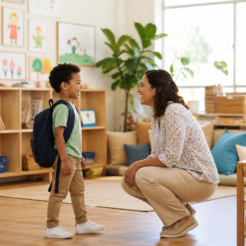
Starting preschool is a big step—not only for children but also for parents. If you feel worried or nervous about sending your child to preschool for the first time, remember that these feelings are completely normal. This can be especially…

For many years, the ages of two and three have been labeled as the “terrible twos.” But what if we reframed this stage as something powerful instead of problematic? What if, instead of seeing difficulty, we recognized growth? Welcome to…
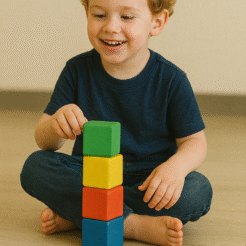
En las aulas de preescolar, los bloques parecen simples juguetes de madera o plástico. Sin embargo, detrás de esos colores y formas se esconde una poderosa herramienta educativa avalada por décadas de investigación en desarrollo infantil. Los bloques no solo…
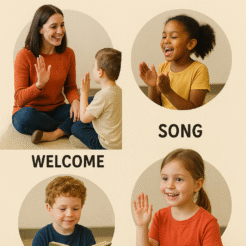
Importancia científica del circle time Desarrollo socio-emocional y comunidad. El circle time crea un espacio predecible donde los niños practican saludos, turnos de palabra y escucha activa; esto fortalece la identidad del grupo, el sentido de pertenencia y las habilidades…
At our preschool, we’ve chosen to go beyond traditional teaching methods. We distance ourselves from the approach where everything is done by command and obligation. Instead, we embrace progressive education, which respects the individual and harmonious development of each…
What is neurodiversity? Neurodiversity describes the idea that people experience and interact with the world around them in many different ways; there is no one "right" way of thinking, learning, and behaving, and differences are not viewed as deficits. The word…
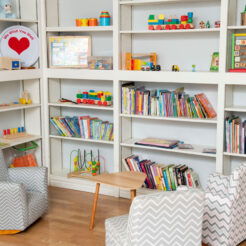
Learning pods, sometimes referred to as "micro-schools" or "nano schools", consist of a small group of students supervised by an experienced and well-trained education professional. The global pandemic in 2020 has wreaked havoc on traditional means of education and millions…